
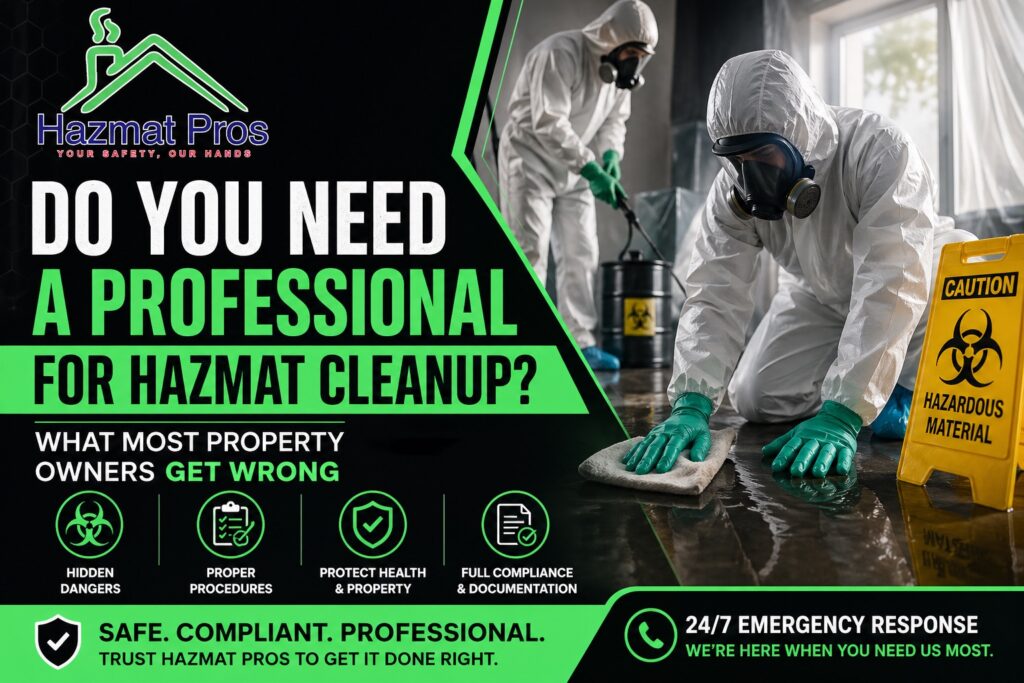
Do You Need a Professional for Hazmat Cleanup? (What Most Property Owners Get Wrong)
Quick Answer: Yes, In Most Cases, You Do When hazardous materials are involved, this is not something you want to guess your way through. Hazmat cleanup isn’t just about “cleaning”—it involves: Identifying dangerous substances Containing contamination Removing and disposing of hazardous waste properly Professionals follow strict safety and regulatory procedures to make an area truly safe again Why This Question Matters This is one of the most common things people ask online: “Can I just clean it myself?” And it makes sense—many hazards don’t look dangerous at first. But here’s the reality: What seems like a small issue can quickly become a serious health and liability risk if handled incorrectly What Counts as a Hazmat Situation? Hazardous materials are more common than most people realize. They can include: Chemical spills Biohazards (blood, bodily fluids) Contaminated soil or surfaces Industrial waste Unknown or unlabeled substances Hazmat cleanup involves removing, decontaminating, and safely disposing of these materials to protect people and the environment The Hidden Dangers of DIY Cleanup 1. You Can’t Always See the Risk Hazardous materials can: Become airborne Spread through dust or vapors Contaminate surfaces beyond what’s visible – By the time you notice a problem, exposure may have already occurred 2. You Might Make the Situation Worse Improper cleanup can: Spread contamination to other areas Increase exposure risk Make the cleanup more expensive later Even small spills can escalate if not handled correctly 3. There Are Strict Safety and Legal Requirements Hazmat cleanup is regulated for a reason. Proper response includes: Safety planning Worker protection standards Controlled handling and disposal These are enforced under safety frameworks like HAZWOPER, which are designed to prevent injury and long-term exposure What Professionals Do (That Most People Can’t) A certified hazmat team doesn’t just clean—they follow a structured process: Step 1: Assessment Identify the substance Evaluate risks and exposure levels Step 2: Containment Isolate the affected area Prevent spread to surrounding spaces Step 3: Safe Removal Use specialized equipment and PPE Remove hazardous materials properly Step 4: Decontamination Clean and neutralize affected surfaces Step 5: Disposal & Documentation Transport waste to approved facilities Provide documentation for compliance and insurance Documentation is critical for legal protection and accountability When You Should Call a Professional Immediately Do not attempt to handle the situation yourself if: You don’t know what the substance is The spill is large or spreading There are fumes, odors, or airborne risks The material is toxic, flammable, or biohazardous People may have been exposed Experts are especially needed when the situation involves unknown or high-risk materials What Happens If You Don’t Hire a Professional? Trying to handle hazmat on your own can lead to: Health risks (short-term and long-term exposure) Environmental contamination Regulatory fines or legal issues Increased cleanup costs later What starts as a “quick cleanup” can turn into a major remediation project What You Should Do Instead If you suspect hazardous materials: Do not disturb the area Keep others away Avoid direct contact or inhalation Call a professional hazmat team immediately Final Thoughts Hazmat situations are not just about cleanliness—they’re about safety, compliance, and risk management. The biggest mistake people make?– Waiting too long or trying to handle it themselves Need Help? Act Fast If you’re dealing with a potential hazard, time matters. A professional team can: Assess the situation quickly Prevent further contamination Restore safety with proper documentation Contact Hazmat Pros today for fast, compliant, and professional cleanup.